
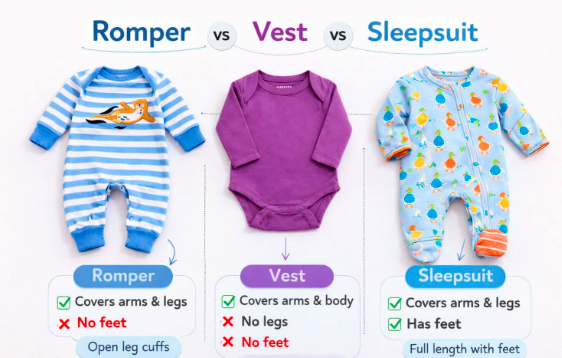
Every new parent has stood in the baby clothing aisle completely overwhelmed. What exactly is a romper? Is a bodysuit the same as an onesie? And why does a sleep suit look just like everything else? Understanding the difference between Baby Rompers vs Bodysuits vs Sleep Suits can save you time, money, and a lot of 3 a.m. frustration.
Before we dive deep, here’s a snapshot of each garment type in the Baby Rompers vs Bodysuits vs Sleep Suits debate:
Baby Romper
A one-piece that covers the torso and has short or long legs. Great for daytime play and photos. Usually has snaps at the crotch or legs.
Bodysuit
A snug one-piece that covers only the torso. Snaps at the crotch keep it tucked in. Worn under other clothes or alone in warm weather.
Sleep Suit
A full-body, footed garment designed for safe, comfortable sleep. Covers feet, legs, arms, and torso. Also called a sleeper or footie pajama.
What Is a Baby Romper?
A baby romper is a one-piece garment that combines a top and shorts or pants into a single outfit. When parents compare Baby Rompers vs Bodysuits vs Sleep Suits, the romper stands out as the most fashion-forward daywear option. Rompers typically feature:
- Short or long leg coverage (unlike a bodysuit, which has none)
- Snap closures at the crotch or inner legs for easy diaper changes
- A variety of necklines — round, V-neck, or envelope collars
- Fun prints, ruffles, collars, and embroidery for stylish daytime looks
- Lightweight fabrics like cotton, linen, or jersey for warm weather
When Should You Use a Baby Romper?
Baby rompers are perfect for daytime outings, family photos, playdates, and casual errands. They look put-together without the hassle of coordinating separates. In the Baby Rompers vs Bodysuits vs Sleep Suits comparison, rompers win for daytime style. They’re especially popular for babies aged 0–18 months.
What Is a Baby Bodysuit?
A baby bodysuit is the true wardrobe workhorse. It’s a close-fitting, short-sleeved (or long-sleeved, or sleeveless) top that snaps at the crotch to prevent it from riding up. In the world of Baby Rompers vs Bodysuits vs Sleep Suits, the bodysuit is the most versatile of all three.
- Covers only the torso — no leg coverage at all
- Snap-crotch design keeps the garment secure all day
- Can be worn alone in summer or layered under pants, leggings, or skirts
- Available in short-sleeve, long-sleeve, and sleeveless styles
- Often called a “onesie” (though Onesie® is technically a brand name)
When Should You Use a Baby Bodysuit?
Bodysuits are ideal year-round. Use them as a base layer in winter under rompers, joggers, or sleep suits. Use them alone in summer. In the Baby Rompers vs Bodysuits vs Sleep Suits guide, the bodysuit is the one item every baby needs in multiples — we recommend at least 7–10 in your rotation.
What Is a Baby Sleep Suit?
A baby sleep suit — also called a sleeper, footie, or footed pajama — is a full-coverage one-piece designed specifically for nighttime sleep and rest. In the Baby Rompers vs Bodysuits vs Sleep Suits conversation, sleep suits are the clear winner for bedtime.
- Covers the entire body: torso, arms, legs, and feet (footed styles)
- Made from soft, breathable fabrics like cotton terry, fleece, or bamboo
- Features full-length front zips or snap closures for quick night changes
- Designed to meet safe sleep guidelines (no loose fabric, snug fit)
- Some styles include fold-over scratch mitts for newborns
When Should You Use a Sleep Suit?
Sleep suits are best for naps, overnight sleep, and cozy mornings at home. Pediatric safe-sleep guidelines recommend fitted sleepwear over loose blankets. In the Baby Rompers vs Bodysuits vs Sleep Suits hierarchy, the sleep suit is the safest and most purposeful bedtime choice. Zip-up styles are especially loved by tired parents at 2 a.m.
Side-by-Side: Baby Rompers vs Bodysuits vs Sleep Suits
Here’s the complete at-a-glance comparison of Baby Rompers vs Bodysuits vs Sleep Suits to help you shop smarter:
| Feature | 👶 Romper | 🧸 Bodysuit | 🌙 Sleep Suit |
|---|---|---|---|
| Coverage | Torso + legs | Torso only | Full body + feet |
| Best Use | Daytime / Outings | Layering / Daywear | Sleep / Naps |
| Leg Coverage | Short or long | None | Full length |
| Closure | Snaps at crotch/leg | Snaps at crotch | Full zip or snaps |
| Layering | Wear alone or with bodysuit | Base layer | Stand-alone sleepwear |
| Diaper Change | Easy (leg snaps) | Easy (crotch snaps) | Easy (full zip) |
| Style Factor | ⭐⭐⭐⭐⭐ | ⭐⭐⭐ | ⭐⭐ |
| Versatility | ⭐⭐⭐ | ⭐⭐⭐⭐⭐ | ⭐⭐ |
| Sleep Safety | Not ideal | Not ideal alone | ✅ Recommended |
| Age Range | NB – 24M | NB – 24M | NB – 24M+ |
How Many of Each Should You Buy?
Now that you understand Baby Rompers vs Bodysuits vs Sleep Suits, here’s a practical starter wardrobe recommendation for the first three months:
Rompers
4–6 pieces
Babies outgrow them fast. Stock 2–3 per size. Focus on easy snap closures and machine-washable fabrics.
Bodysuits
7–10 pieces
Your most-used item. Get a mix of short and long sleeves. White and neutral colours show stains less.
Sleep Suits
4–6 pieces
You need enough for a full week plus spills. Zip-up styles are easiest for night changes.
Choosing by Season: What to Wear When
The right choice in Baby Rompers vs Bodysuits vs Sleep Suits also depends heavily on the weather:
☀️ Summer / Hot Weather
A sleeveless bodysuit alone works perfectly for indoor days. For outings, choose a lightweight cotton or muslin romper. For bedtime, use a short-sleeve bodysuit or a lightweight sleep suit in a breathable fabric like bamboo or cotton gauze.
🍂 Autumn / Transitional Weather
Layer a long-sleeve bodysuit under a romper for extra warmth. At bedtime, switch to a full-coverage cotton sleep suit. This is when the layering power of the bodysuit in the Baby Rompers vs Bodysuits vs Sleep Suits trio really shines.
❄️ Winter / Cold Weather
Use a long-sleeve bodysuit as a base, add a thick romper or overalls on top, and finish with a fleece or cotton-terry sleep suit at night. For extra warmth, a 2.5 TOG sleep sack over the sleep suit is safe and effective.
Frequently Asked Questions: Baby Rompers vs Bodysuits vs Sleep Suits
Can a baby sleep in a romper?
Technically yes, but it’s not ideal. Sleep suits are specifically designed for safe sleep with a snug fit that reduces risk. In the Baby Rompers vs Bodysuits vs Sleep Suits debate, always choose a sleep suit for naps and overnight sleep when possible.
Is a bodysuit the same as a onesie?
“Onesie” is a trademarked brand name by Gerber, but it’s widely used to describe any snap-crotch baby bodysuit. So yes — in everyday conversation, bodysuit and onesie mean the same thing.
At what age can babies wear rompers?
From newborn onwards! Many rompers come in preemie and newborn sizes. The snap-crotch design makes diaper changes easy even in tiny sizes.
Do I need all three: rompers, bodysuits, AND sleep suits?
Yes, ideally. Each serves a different purpose in the Baby Rompers vs Bodysuits vs Sleep Suits spectrum. Bodysuits are daily essentials, rompers are daywear staples, and sleep suits are nighttime necessities.
What’s the difference between a sleep suit and a sleep sack?
A sleep suit (sleeper/footie) is a full-body garment with arms and legs. A sleep sack is a wearable blanket with no leg division — more like a sleeping bag with armholes. Both are safe sleep options; many parents use both together in winter.
Which is easier for diaper changes — rompers, bodysuits, or sleep suits?
All three are designed for easy diaper changes. Zip-up sleep suits are fastest at night. Snap-crotch bodysuits are quick during the day. Rompers with leg snaps are easy too — just choose designs with fewer snaps to keep things simple.
The Final Verdict
When it comes to Baby Rompers vs Bodysuits vs Sleep Suits, there’s no single winner — each garment has its place in your baby’s wardrobe. Stock up on bodysuits as your foundation, add rompers for adorable daytime looks, and always have enough sleep suits for safe, comfortable nights. Understanding Baby Rompers vs Bodysuits vs Sleep Suits means less stress, smarter shopping, and one very well-dressed baby.