
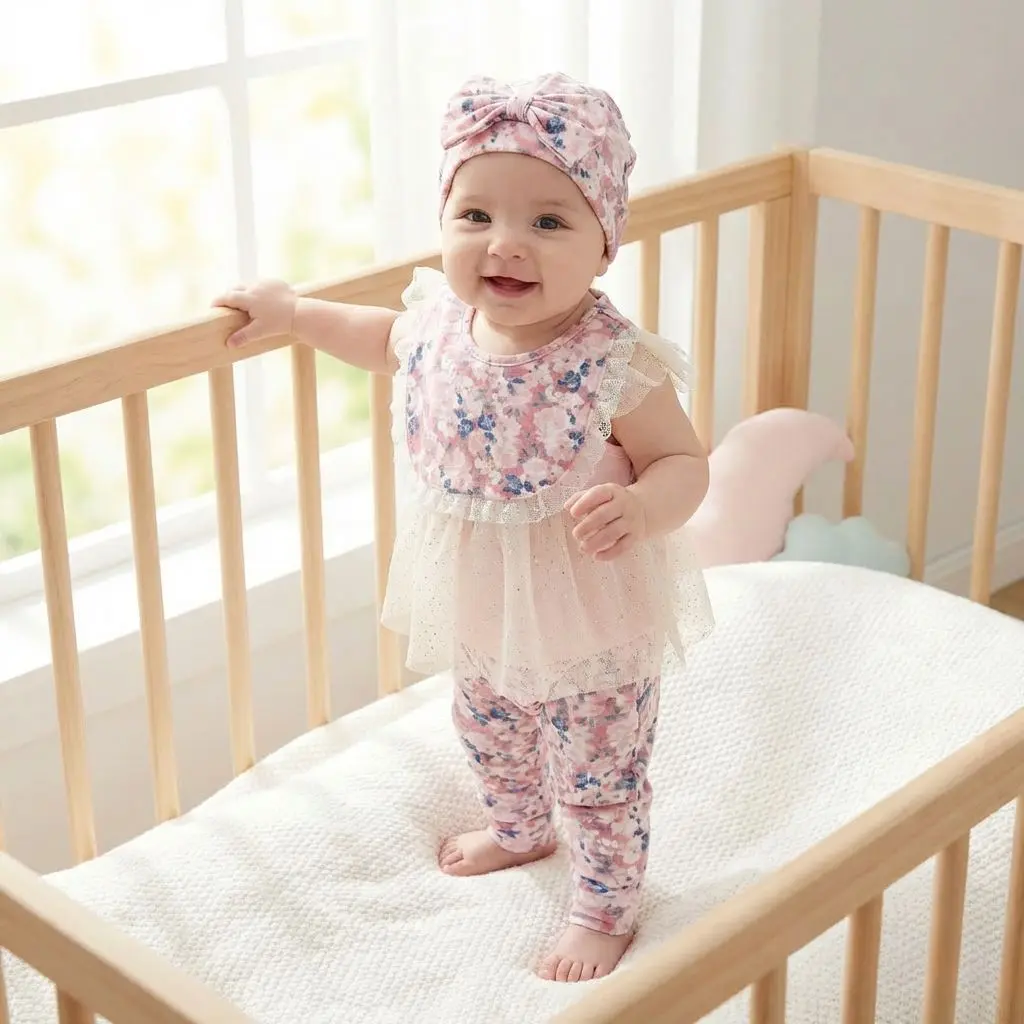
What to dress your baby in during a UK summer , UK summers are wonderfully unpredictable — glorious sunshine one hour, a light shower the next, and sometimes both at once. Dressing your baby comfortably and safely through it all doesn’t have to be stressful. This guide covers everything you need to know, from fabrics and layers to a handy temperature chart you’ll want to save.
What to dress your baby in during a UK summer
Unlike adults, babies cannot regulate their own body temperature effectively. They overheat quickly in warm weather and cool down just as fast — which makes what they wear genuinely important for their health and comfort, not just a style decision.
In the UK, summer temperatures typically range from around 16°C on a cloudy day to 32°C+ during a heatwave. That’s a huge range, and you might experience both extremes in the same week. The key is having a flexible wardrobe that lets you layer up or strip back as needed.
Overheating risk
Air circulation
Sun protection
Moisture control
The UK baby summer temperature guide
Use this quick-reference guide every morning before you dress your little one. Remember — the temperature can change throughout the day, so pack a spare layer when heading out.
| Temperature | What to wear | Layers |
|---|---|---|
| Below 16°C | Vest bodysuit + sleepsuit or outfit + cardigan or light jacket | 3 layers |
| 16–19°C | Short-sleeve vest bodysuit + lightweight cotton romper or outfit set | 2 layers |
| 20–23°C | Short-sleeve bodysuit + light trousers, a dress, or a romper | 1–2 layers |
| 24–26°C | Short-sleeve vest or short romper only — no need for an extra layer | 1 layer |
| 27°C+ | Nappy + loose cotton vest or very lightweight short romper | Minimal |
What to dress your baby in during a UK summer — and what to avoid
The material your baby wears makes an enormous difference in summer. Natural fibres breathe, wick moisture and feel gentle on sensitive newborn skin. Synthetic fabrics trap heat and can cause irritation — even if they look soft.
Fabrics to choose
Fabrics to avoid next to skin
Cotton is the gold standard — widely available, soft, hypoallergenic and easy to wash. Muslin is brilliant for swaddling or using as a light cover in high heat. If your baby has sensitive skin or eczema, organic cotton or bamboo blends are worth the investment for their extra softness.
Summer outfit ideas for every occasion
Not all summer days call for the same outfit. Here’s what works best depending on where you’re headed:
At home
Park or garden
Shopping or indoor
Special occasion
Newborn-specific summer tips (0–3 months)
Newborns need extra care in summer because their temperature regulation is still developing. Their skin is also far more sensitive to the sun than older babies.
- Keep newborns out of direct sunlight entirely — their skin is too delicate for sunscreen and burns very easily
- A short-sleeve cotton vest is usually enough indoors on warm days above 20°C
- Use a lightweight muslin swaddle rather than a thick cotton blanket for nap times
- Watch for heat rash — tiny red bumps around the neck, armpits or in skin folds
- Never cover a pram with a blanket or muslin to block sun — it traps heat dangerously
- Don’t apply sunscreen to babies under 6 months — use shade and clothing instead
- Use a pram with a large hood or a UV-rated parasol to keep baby shaded when outside
Night-time dressing in summer
Getting the sleep environment right in summer is crucial for safe sleep. The NHS recommends a bedroom temperature of 16–20°C as the ideal range for a sleeping baby. Here’s how to dress them accordingly:
| Room temperature | Recommended sleepwear |
|---|---|
| Below 16°C | Vest + full sleepsuit + 2.5 tog sleeping bag |
| 16–18°C | Vest + sleepsuit + 1 tog sleeping bag |
| 19–21°C | Short-sleeve bodysuit + 1 tog sleeping bag |
| 22–24°C | Short-sleeve bodysuit only, no sleeping bag needed |
| 25°C+ | Nappy only, or a very light muslin swaddle if baby seems unsettled |
Quick do’s and don’ts for summer dressing
- Do layer up — always pack a cardigan even on warm UK days, the weather changes fast
- Do check your baby’s temperature regularly by feeling the back of their neck or tummy
- Do choose natural fabrics like cotton, muslin or bamboo
- Do use a wide-brim hat and shade when outdoors during peak sun hours (11am–3pm)
- Don’t overdress — overheating is a greater risk in summer than being slightly cool
- Don’t rely on synthetic fabrics — polyester traps heat and irritates delicate skin
- Don’t cover a pram with a blanket to create shade — this traps dangerous heat inside
- Don’t judge temperature by your baby’s hands or feet — these are naturally cool
Frequently asked questions
What to dress your baby in during a UK summer?
The NHS recommends keeping babies under 6 months entirely out of direct sunlight and not applying sunscreen at this age. For babies 6 months and over, use a factor 50+ sunscreen on any exposed skin and reapply every two hours, or after swimming.
Should my baby wear a hat in summer?
Yes — a wide-brimmed cotton or linen hat is essential when you’re outdoors on sunny days. It protects the scalp, face, and ears from UV exposure and helps prevent overheating.
What should my baby sleep in during a heatwave?
When room temperatures reach 25°C or above, a nappy alone or a short-sleeve bodysuit with no sleeping bag is usually sufficient. Keep a window open and use a fan to circulate air around the room — just don’t direct it straight at your baby.
Are rompers good for baby in summer?
Absolutely. A short-sleeve cotton romper is one of the most practical and popular summer pieces you can own. They provide great airflow, are easy to put on, and look adorable. For outdoor wear, opt for a long-sleeve version for extra sun coverage and add a wide-brim hat.
How do I know if my baby is too hot?
Check the back of their neck or their tummy — if it feels hot and sweaty, they’re too warm. Other signs include flushed cheeks, rapid breathing, or seeming unsettled. Remove a layer and move them somewhere cooler. Do not rely on their hands or feet as a temperature guide, as these are naturally cooler than the rest of the body.